
When Your Call Center Runs on ONE System, Everyone Wins
Marcus has been a healthcare call center agent for three years. He’s good at his job: calm under pressure, patient with frustrated callers, quick to find answers. But some mornings, before he’s even taken his first call, he’s already navigating four different systems just to pull up a patient’s history.
By 10 AM, he’s apologized twice for putting callers on hold while he hunted for the right protocol. He’s transferred one call that should have been resolved in two minutes. And he’s quietly dreading the afternoon, when call volume peaks and the gaps in his workflow become impossible to hide.
Marcus isn’t struggling because he’s undertrained. He’s struggling because his tools are working against him.
If your call center team recognizes this pattern, you’re not alone, and the fix may be simpler than you think.
One platform, one workflow, one experience patients can count on. See the Rule of ONE in action.
Your Healthcare Call Center Team Succeeds When You Have a Unified System of Record
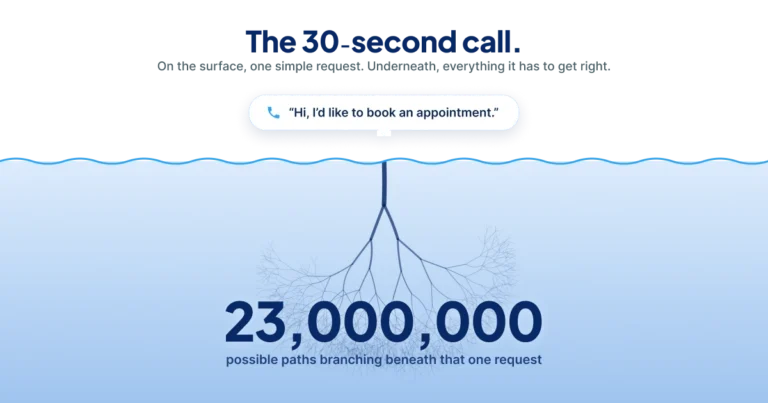
Healthcare call centers ask a lot of their staff. In the span of a single shift, agents field urgent medical inquiries, navigate insurance questions, schedule across multiple providers and locations, and deliver every interaction with patience and precision: often while juggling multiple screens.
When processes are fragmented and information lives in a dozen different places, even the most capable agent hits a ceiling. Calls take longer. Errors creep in. Patients sense the hesitation and lose confidence. And staff, no matter how dedicated, start to feel the weight of a system that wasn’t designed with them in mind.
The good news: operational complexity doesn’t have to mean operational chaos. The Rule of ONE offers a way forward.
What the Rule of ONE Actually Means: Efficient Call Center Operations
The Rule of ONE is a framework built on a straightforward idea: when call center staff have one place to go, one consistent process to follow, and one standard format for every interaction, everything works better, for agents and for patients.
It’s not about oversimplifying complex work. It’s about removing the unnecessary friction that makes complex work harder.
When Information Lives in ONE Place, Calls Get Shorter
Agents shouldn’t have to hunt for answers mid-call. When all call flows, protocols, and patient information are housed in a single, centralized system, staff can find what they need in seconds, not minutes. The result is shorter call times, fewer errors, and patients who feel heard instead of put on hold.
When Every Call Type Follows ONE Process, Consistency Becomes the Standard
Whether a patient is scheduling a new appointment, asking about a lab result, or navigating a billing concern, the process should follow the same structured approach. Consistency eliminates confusion, reduces onboarding time for new staff, and ensures every patient receives the same quality of care regardless of who picks up the phone.
When Every Interaction Follows ONE Format, Confidence Goes Up
A clear, repeatable call structure: greeting, identification, call type, resolution, closing, and documentation gives agents a framework they can rely on. This isn’t about scripting every word. It’s about giving staff the confidence to move through complex interactions without second-guessing each step.
How to Support Your Call Center Staff Without Disrupting What's Already Working
Bring Everything Into ONE System
If your agents are switching between platforms to complete a single call, that’s where efficiency breaks down first. Centralizing workflows and protocols into one intuitive system is the highest-leverage change a call center can make. When the right information is always one click away, agents stop hesitating, and calls start resolving.
Make Your Processes Intuitive, Not Just Standardized
Standardization only works when the processes themselves make sense. The goal is call flows that are so clear and logical that agents aren’t thinking about what comes next. Instead, they’re focused entirely on the patient in front of them. Decision support tools and guided workflows make this kind of intuitive standardization possible at scale.
Invest in Training That Scales
When every call follows the same format, onboarding new staff stops being a months-long project. New hires learn one system, one process, one standard, and they’re more productive more quickly. Cross-training becomes simpler. Institutional knowledge is easier to transfer. The whole team benefits.
Measure What Actually Matters
Implementing the Rule of ONE is a starting point, not a finish line. Tracking first-call resolution rates, average handle time, and patient satisfaction scores alongside each other gives leadership a complete picture of call center health, and a clear signal when something needs to change. The goal isn’t just speed. It’s resolution.
What Changes When the Call Center System Works For Your Team
When call center staff aren’t fighting their tools, something shifts. Calls that used to take eight minutes get resolved in four. Transfers drop. Callbacks shrink. Patients stop asking to speak to a supervisor.
For staff, the change is just as significant. Agents stop dreading high-volume afternoons. New hires stop feeling overwhelmed in their first weeks. And experienced team members, like Marcus, finally have a system that matches their capabilities.
For patients, the difference is felt immediately: fewer holds, fewer transfers, and fewer moments of “let me look that up.” Just clear, confident, efficient care.
From Reactive to Reliable: The Call Center Your Patients Deserve
Marcus finishes his shift. Today was different. He didn’t switch between four systems to pull a patient history. He didn’t apologize for unnecessary holds. He transferred one call, because it genuinely required a specialist, not because the workflow left him no other option.
He’s the same agent he was six months ago. His team is the same team. But the system finally matches the standard they’ve always been capable of.
That’s what the Rule of ONE makes possible: not a different team, but a team that can finally do their best work.
If your call center is ready to move from reactive to reliable, Keona Health’s implementation team can help you map the path. Schedule a demo to see what unified call center operations looks like in practice.
Frequently Asked Questions
What is the Rule of ONE in healthcare call centers?
The Rule of ONE is an operational framework that centralizes call flows, standardizes processes, and establishes a consistent interaction format across all patient call types. The goal is to reduce the friction created by fragmented systems and inconsistent workflows. It gives agents a single, reliable process for every interaction.
Why do healthcare call centers struggle with efficiency?
Most healthcare call center inefficiencies stem from fragmented systems; agents toggling between multiple platforms, following inconsistent protocols, or lacking access to the right information at the right time. These gaps extend call duration, increase transfer rates, and create a patient experience that feels disorganized, even when staff are working hard.
How does centralizing call flows improve patient experience?
When all information and protocols live in one system, agents spend less time searching and more time resolving. Patients spend less time on hold and less time repeating themselves. Shorter, more accurate calls lead directly to higher patient satisfaction and fewer callbacks.
What metrics should healthcare call centers track beyond average handle time?
First-call resolution rate, transfer rate, call abandonment rate, and patient satisfaction scores all provide a more complete picture of call center performance than handle time alone. Tracking these metrics together helps leadership identify where workflows are breaking down and where staff need additional support.
How long does it take to implement the Rule of ONE?
Implementation timelines vary by organization size and system complexity, but most teams see measurable improvements within 90 days of centralizing workflows and standardizing call formats. Ongoing measurement and refinement ensure the framework continues to improve over time.
Can the Rule of ONE work for multi-specialty or multi-location organizations?
Yes. The framework is designed to scale across complex organizations. Centralizing workflows doesn't mean eliminating specialty-specific protocols, it means making those protocols consistently accessible from a single system, regardless of which location or department an agent supports.
How does this approach affect call center staff retention?
Operational clarity has a direct impact on agent satisfaction. When staff have reliable tools, clear processes, and support for complex interactions, burnout decreases and job satisfaction improves. Organizations that invest in streamlined call center operations typically see lower turnover and faster onboarding for new hires.